
 EN
EN



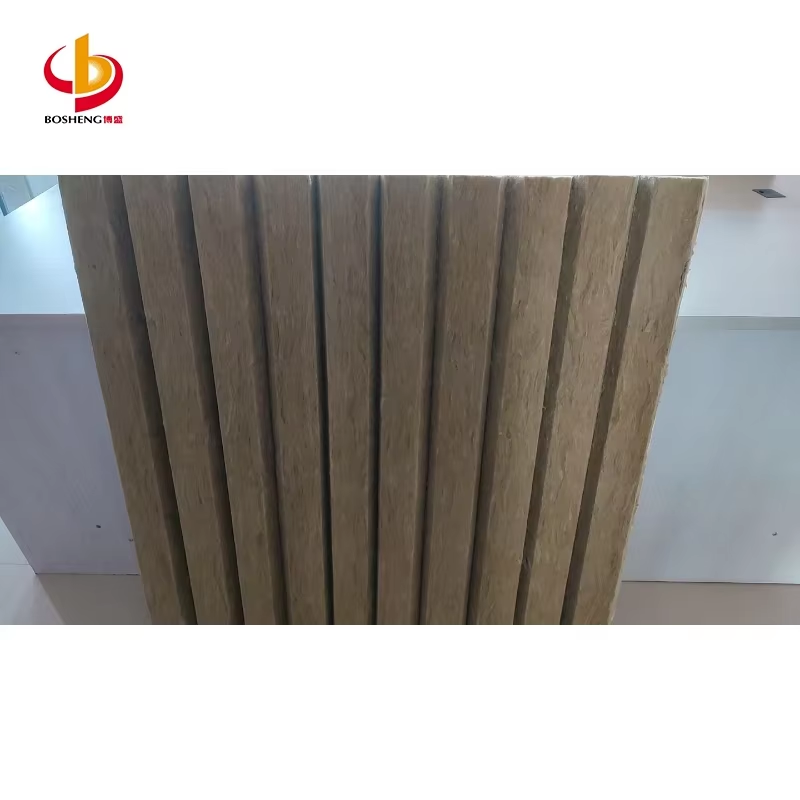
When it comes to insulating ships and offshore vessels, material selection directly affects safety, performance, and installation efficiency. A rock wool strip has emerged as a preferred insulation format over traditional rolls for many marine applications. Understanding why this format excels on ships requires looking at the specific demands of shipboard environments and how a rock wool strip addresses them more precisely than a rolled product.
Ships present a uniquely challenging environment for insulation. Curved pipe runs, narrow engine room corridors, vibrating hull panels, and strict fire-safety regulations all create conditions where a rock wool strip delivers measurable advantages. Unlike wide rolls that must be cut and shaped repeatedly on-site, a rock wool strip arrives in a dimensionally accurate, manageable format that fits directly into marine insulation workflows. This article explores the specific advantages that make a rock wool strip the smarter choice for shipbuilding and vessel refurbishment projects.
Dimensional Precision and Fit in Marine Installations
Accurate Sizing Reduces On-Site Waste
A rock wool strip is cut to specific widths during manufacturing, which means installers receive a product sized for the target application. On a ship, pipework diameters, duct dimensions, and panel gaps rarely match the full width of a standard roll. When workers must cut a roll repeatedly to achieve the right fit, they generate significant material waste and spend extra labor time. A rock wool strip eliminates much of this cutting effort because the strip width is already matched to standard marine pipe and duct specifications. Across a large vessel with hundreds of pipe segments, the material savings from using a rock wool strip rather than a roll are substantial.
Better Performance on Curved and Narrow Surfaces
Pipe insulation on ships is rarely a simple straight run. Bends, elbows, T-junctions, and valve bodies all require insulation that conforms without leaving gaps. A rock wool strip wraps around curved surfaces more cleanly than a wide roll section, because the narrow format bends with less resistance and maintains uniform contact along the pipe surface. Uniform contact is critical for preventing thermal bridging, which is a point where heat bypasses the insulation and reaches the metal surface. Thermal bridging in a marine environment accelerates corrosion and reduces the overall effectiveness of the insulation system. A rock wool strip minimizes this risk by conforming accurately to the geometry of the insulated component.
Fire Safety and Thermal Performance on Vessels
Meeting Marine Fire Ratings with Rock Wool Strip
Fire protection is a non-negotiable requirement in shipbuilding. Classification societies and international maritime regulations demand that insulation materials used in engine rooms, accommodation areas, and critical pipe systems meet strict fire-resistance standards. Rock wool strip is made from mineral wool fibers derived from volcanic basalt or similar rock materials, giving it excellent non-combustibility. A rock wool strip does not ignite, spread flame, or release toxic gases under fire conditions, which is essential for crew safety and vessel survivability. Because a rock wool strip can be precisely fitted without gaps, the fire-rated integrity of the insulation layer is maintained along the entire length of protected pipework or bulkhead surface. Rolls, when cut and rejoined, can leave small gaps at junctions that compromise fire-rated continuity.
Thermal Efficiency Throughout the Vessel
Thermal insulation on a ship serves multiple purposes: it conserves energy in heating and cooling systems, protects personnel from hot pipe surfaces, and prevents condensation on cold lines. A rock wool strip provides consistent thermal resistance across its full width because the fiber structure is uniform. When a roll is cut and repositioned, the cut edges may compress or lose density, creating locally weaker insulation zones. A rock wool strip maintains its designed density from edge to edge, ensuring that the thermal resistance value declared by the manufacturer is actually delivered in the installed condition. For ships operating in cold northern waters or tropical climates, consistent thermal performance from every rock wool strip section directly reduces operational energy costs.
Handling, Storage, and Installation Efficiency at Sea
Compact Format Suits Confined Shipboard Spaces
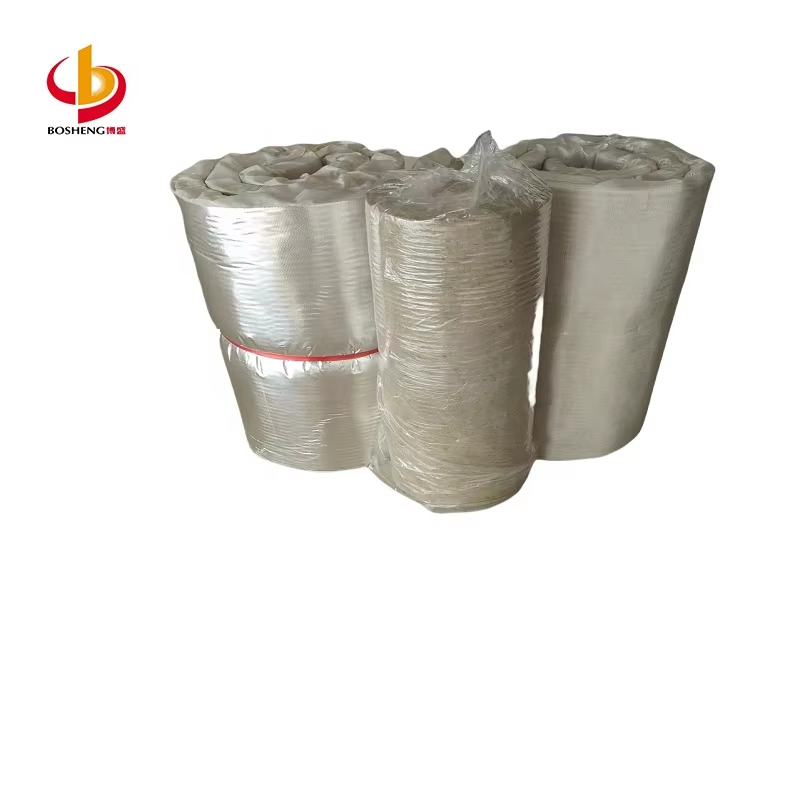
Storage space on a ship or in a shipyard workshop is always limited. A rock wool strip, being narrow and uniform, can be packed and stored far more efficiently than large rolls. Bundles of rock wool strip take up less floor space, stack more securely, and are easier to transport through narrow hatches and corridors. Workers can carry a manageable quantity of rock wool strip to the work site without needing trolleys or large staging areas. This advantage becomes especially significant during vessel refurbishment, where insulation replacement must happen in active or recently decommissioned spaces with limited access. The compact and organized nature of rock wool strip packaging means less time is spent managing materials and more time is spent on productive installation work.
Faster Application Reduces Labor Hours
In shipbuilding and marine repair, labor cost is one of the largest contributors to project budgets. A rock wool strip speeds up installation because it requires less on-site cutting, fewer adjustments, and cleaner handling compared to sections cut from a wide roll. Installers can unpack a rock wool strip, position it directly on the pipe or surface, and secure it without the intermediate shaping steps that rolls require. When multiplied across an entire vessel with thousands of meters of insulated pipework, the time savings from using rock wool strip over rolls can represent a meaningful reduction in total installation labor. Faster installation also means vessels return to service more quickly, which reduces the revenue loss associated with maintenance downtime.
FAQ
Why is a rock wool strip preferred over a roll for pipe insulation on ships?
A rock wool strip is preferred because it arrives pre-cut to widths that match standard pipe diameters, reducing on-site cutting, minimizing waste, and ensuring uniform contact around curved pipe surfaces. This makes the rock wool strip faster to install and more thermally consistent than sections cut from a wide roll.
Does a rock wool strip meet marine fire safety regulations?
Yes. A rock wool strip is manufactured from non-combustible mineral fibers that do not ignite or spread flame. When installed without gaps, a rock wool strip maintains the fire-rated continuity required by classification societies and international maritime standards, making it suitable for engine rooms and other fire-critical zones.
How does a rock wool strip perform in humid marine environments?
A rock wool strip has inherently low moisture absorption due to its inorganic mineral fiber composition. In the high-humidity conditions typical of engine rooms and below-deck areas, a rock wool strip resists moisture-related degradation better than organic insulation materials, helping to maintain its thermal and fire-protective properties over the service life of the vessel.