
 EN
EN




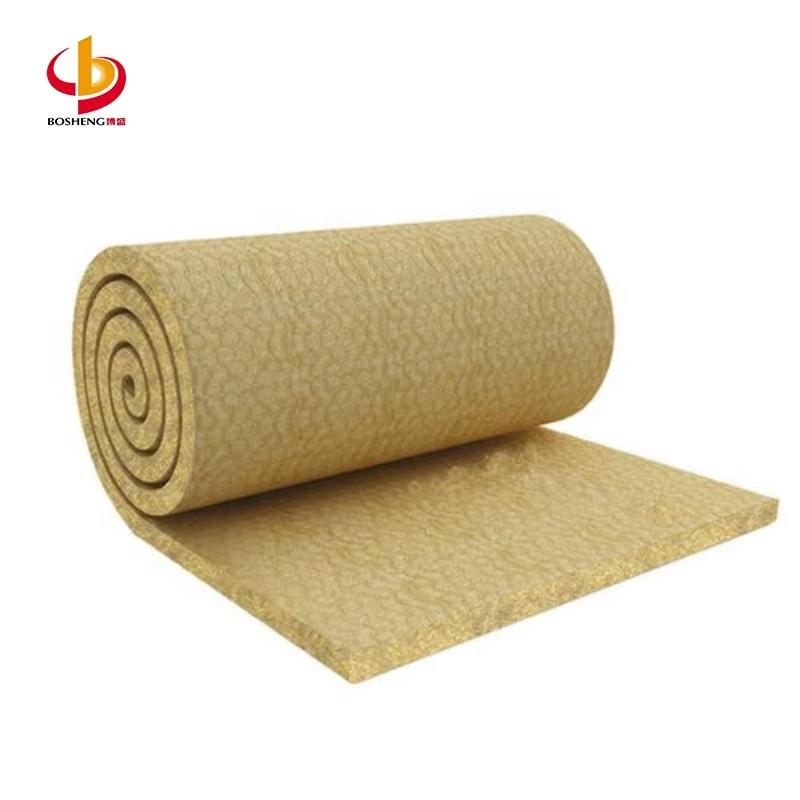
The construction industry continuously seeks materials that deliver superior performance in thermal insulation, fire resistance, and acoustic control. Rock wool rolls have emerged as a versatile solution that addresses these critical requirements across diverse building applications. These mineral fiber products, manufactured from molten basalt rock and recycled steel slag, offer exceptional properties that make them indispensable in modern construction projects.
Understanding the optimal applications for rock wool rolls enables architects, engineers, and contractors to maximize their benefits while ensuring compliance with building codes and performance standards. From residential buildings to industrial facilities, these materials provide consistent thermal performance and contribute significantly to energy efficiency goals. The growing emphasis on sustainable construction practices has further elevated the importance of selecting appropriate insulation materials for specific applications.
Thermal Insulation Applications in Building Envelopes
Wall Cavity Insulation Systems
Wall cavity insulation represents one of the most common applications for rock wool rolls in residential and commercial construction. The flexible nature of these materials allows for easy installation between wall studs, creating continuous thermal barriers that minimize heat transfer. Professional installers appreciate how rock wool rolls conform to irregular spaces and maintain their insulating properties over extended periods without settling or degrading.
The vapor permeability characteristics of rock wool rolls make them particularly suitable for cavity wall applications where moisture management is crucial. Unlike some synthetic insulation materials, these mineral fiber products allow water vapor to pass through while maintaining their thermal performance. This property helps prevent condensation issues that can lead to mold growth and structural damage in wall assemblies.
Installation techniques for wall cavity applications require careful attention to achieving proper fit and coverage. Contractors typically cut rock wool rolls slightly oversized to ensure compression fit between framing members, eliminating thermal bridges and air gaps. The material's resilience allows it to maintain contact with framing surfaces while accommodating minor irregularities in construction tolerances.
Roof and Attic Insulation Solutions
Roof applications demand insulation materials that can withstand extreme temperature variations while providing consistent thermal performance. Rock wool rolls excel in these environments due to their stability across wide temperature ranges and resistance to thermal cycling effects. The material's non-combustible properties add an extra layer of safety in roof assemblies where fire resistance is paramount.
Attic floor insulation using rock wool rolls offers homeowners and building operators significant energy savings through reduced heating and cooling loads. The material's ability to maintain its loft over time ensures long-term performance without the settling issues associated with some other insulation types. Proper installation techniques include ensuring adequate coverage around penetrations and maintaining specified thickness requirements.
Cathedral ceiling applications present unique challenges that rock wool rolls address effectively through their flexibility and conformability. The material can be installed in sloped applications while maintaining consistent density and thermal properties. Ventilation considerations in these assemblies require careful coordination between insulation placement and air movement paths to prevent moisture accumulation.
Fire Safety and Protection Systems
Fire Barrier Assemblies
Fire safety regulations in commercial and industrial construction often mandate the use of non-combustible insulation materials in critical applications. Rock wool rolls meet these stringent requirements while providing excellent thermal protection in fire-rated assemblies. The material's melting point exceeds 1000 degrees Celsius, ensuring structural integrity during fire events and providing valuable evacuation time.
Penetration sealing applications utilize rock wool rolls to maintain fire ratings in wall and floor assemblies where pipes, ducts, and electrical conduits pass through fire barriers. The material's ability to expand when exposed to heat creates effective seals that prevent fire and smoke propagation between compartments. Installation procedures must follow manufacturer specifications and testing agency requirements to maintain certified fire ratings.
Industrial facility applications frequently require fire protection systems that can withstand harsh operating conditions while maintaining safety performance. Rock wool rolls provide reliable fire protection in these environments while resisting chemical exposure and mechanical damage. The material's dimensional stability under thermal stress ensures long-term effectiveness in critical fire safety applications.
High-Temperature Process Insulation
Manufacturing facilities and power generation plants require insulation materials capable of withstanding elevated temperatures while providing personnel protection and energy conservation. Rock wool rolls serve these demanding applications through their exceptional thermal stability and low thermal conductivity properties. The material maintains its insulating effectiveness at temperatures where organic materials would decompose or lose structural integrity.
Boiler and furnace applications benefit from the high-temperature performance characteristics of rock wool rolls, particularly in areas where flexible insulation is required around complex geometries. The material's resistance to thermal shock prevents cracking and degradation during heating and cooling cycles. Installation considerations include proper support systems and protection from mechanical damage in high-traffic maintenance areas.
Process piping insulation using rock wool rolls provides energy conservation and personnel protection in industrial settings. The material's ability to conform to pipe curvatures and fittings while maintaining consistent thickness ensures uniform thermal performance throughout complex piping systems. Proper jacketing and weather protection extend service life in outdoor applications subject to environmental exposure.
Acoustic Performance and Sound Control
Interior Partition Systems
Modern building design increasingly emphasizes acoustic comfort and noise control, making sound absorption properties a critical consideration in material selection. Rock wool rolls provide excellent acoustic performance through their fibrous structure, which effectively absorbs sound energy across a broad frequency range. This capability makes them ideal for interior partition systems where sound transmission control is essential.
Office building applications require acoustic solutions that maintain speech privacy while allowing necessary communication between spaces. Rock wool rolls installed in partition cavities significantly reduce sound transmission between adjacent rooms and workspaces. The material's density and fiber structure contribute to its sound absorption coefficient, which determines its effectiveness in reducing reverberation and echo within spaces.
Healthcare facility acoustics demand specialized attention to patient comfort and privacy requirements. Rock wool rolls contribute to creating healing environments by controlling noise levels in patient rooms, treatment areas, and administrative spaces. The material's non-fibrous release characteristics make it suitable for healthcare applications where indoor air quality is paramount.
Mechanical System Sound Attenuation
Mechanical equipment generates significant noise levels that require effective control measures to maintain acceptable indoor environments. Rock wool rolls provide excellent sound attenuation when installed around HVAC equipment, pipes, and ductwork. The material's ability to absorb both airborne and structure-borne noise makes it valuable in comprehensive acoustic design strategies.
Ductwork insulation applications utilize rock wool rolls to reduce both thermal losses and noise transmission from air handling systems. The material's flexibility allows for installation around complex duct configurations while maintaining acoustic performance. Proper installation techniques include ensuring continuous coverage and appropriate density to achieve specified acoustic ratings.
Equipment room applications benefit from the dual thermal and acoustic properties of rock wool rolls, particularly in spaces housing boilers, chillers, and other mechanical equipment. The material helps contain equipment noise while providing thermal insulation for energy efficiency. Installation considerations include fire safety requirements and maintenance access provisions in mechanical spaces.
Industrial and Specialized Construction Applications
Marine and Offshore Environments
Marine construction presents unique challenges that require insulation materials capable of withstanding harsh environmental conditions while maintaining performance standards. Rock wool rolls demonstrate exceptional resistance to salt water exposure and humidity fluctuations common in marine environments. The material's inorganic composition prevents degradation from biological growth and chemical exposure typical in marine applications.
Shipbuilding applications utilize rock wool rolls for both thermal insulation and fire protection in accommodation areas, engine rooms, and cargo spaces. The material's lightweight properties contribute to vessel efficiency while providing essential safety characteristics required by maritime regulations. Installation procedures must accommodate vessel movement and vibration while maintaining insulation integrity.
Offshore platform construction demands materials that can withstand extreme weather conditions and potential hydrocarbon exposure. Rock wool rolls provide reliable thermal performance in these challenging environments while meeting stringent fire safety requirements for offshore installations. The material's resistance to wind-driven moisture and salt spray ensures long-term performance in exposed applications.
Cold Storage and Refrigeration Facilities
Temperature-controlled storage facilities require insulation systems that maintain consistent thermal performance across wide temperature differentials while preventing condensation and ice formation. Rock wool rolls excel in these applications through their vapor permeability and dimensional stability at low temperatures. The material's ability to resist moisture absorption prevents performance degradation in high-humidity environments.
Food processing plant applications demand insulation materials that meet strict hygiene standards while providing reliable thermal performance. Rock wool rolls satisfy these requirements through their inorganic composition and resistance to bacterial growth. Installation techniques must ensure proper sealing and protection to maintain sanitary conditions while preserving insulation effectiveness.
Pharmaceutical manufacturing facilities require precise temperature control and contamination prevention in critical production areas. Rock wool rolls contribute to maintaining stable environmental conditions while providing fire safety benefits essential in facilities handling flammable solvents and chemicals. The material's non-shedding characteristics make it suitable for cleanroom environments where particulate control is essential.
Installation Best Practices and Performance Optimization
Proper Handling and Storage Techniques
Successful rock wool roll installation begins with proper material handling and storage practices that preserve product integrity and performance characteristics. Materials should be stored in dry, covered areas protected from moisture exposure that could affect thermal properties. Proper lifting techniques and cutting tools ensure clean installations without fiber damage or compression that could reduce insulation effectiveness.
Transportation considerations include protecting materials from weather exposure and mechanical damage during delivery to construction sites. Packaging systems designed for rock wool rolls provide compression while allowing recovery of full thickness upon installation. Project scheduling should minimize storage time on construction sites to prevent contamination and maintain material quality.
Quality control procedures during installation include verifying material specifications, checking for damage, and ensuring proper fit and coverage. Documentation requirements may include photographic records of installation progress and thermal imaging verification of continuous coverage. These practices help ensure warranty compliance and long-term performance satisfaction.
Integration with Building System Components
Effective insulation performance requires careful coordination with other building system components including vapor barriers, air barriers, and structural elements. Rock wool rolls must be properly integrated with these systems to prevent thermal bridging and moisture intrusion that could compromise overall building performance. Design coordination ensures compatibility between insulation properties and system requirements.
Mechanical system integration involves coordinating insulation placement with electrical and plumbing installations to maintain continuous thermal barriers while providing necessary access for maintenance. Rock wool rolls can be easily cut and fitted around penetrations while maintaining fire ratings and thermal performance when properly detailed.
Building envelope performance depends on eliminating gaps and thermal bridges that can significantly reduce overall insulation effectiveness. Rock wool rolls provide excellent gap-filling capabilities when properly installed with appropriate compression and overlap techniques. Thermal modeling and energy analysis help optimize insulation placement for maximum building performance benefits.
FAQ
How do rock wool rolls compare to other insulation materials in terms of fire resistance?
Rock wool rolls offer superior fire resistance compared to organic insulation materials like cellulose or foam products. With a melting point exceeding 1000°C, they maintain structural integrity during fire events and do not contribute fuel to fires. This makes them particularly valuable in commercial buildings, high-rise construction, and industrial applications where fire safety codes require non-combustible insulation materials.
What thickness of rock wool rolls should be used for optimal thermal performance?
The optimal thickness depends on climate zone, building type, and specific performance targets. Residential applications typically use thicknesses ranging from 3.5 to 6 inches in walls and 8 to 12 inches in attics. Commercial projects may require greater thicknesses based on energy code requirements and project-specific thermal modeling. Consulting with insulation professionals and using energy analysis software helps determine the most cost-effective thickness for specific applications.
Can rock wool rolls be used in moisture-prone areas like basements?
Rock wool rolls are well-suited for moisture-prone environments due to their vapor permeability and resistance to mold growth. Unlike organic materials, they do not support biological growth and maintain their insulating properties when exposed to moisture. However, proper vapor barrier installation and moisture control strategies remain essential for optimal performance and building durability in below-grade applications.
What safety precautions are necessary when installing rock wool rolls?
Installation safety requires appropriate personal protective equipment including dust masks, safety glasses, long sleeves, and gloves to prevent skin irritation from mineral fibers. Adequate ventilation in work areas helps minimize airborne particles. While rock wool fibers are considered safe and non-carcinogenic, following manufacturer safety guidelines and OSHA recommendations ensures worker protection during installation and handling operations.
Table of Contents
- Thermal Insulation Applications in Building Envelopes
- Fire Safety and Protection Systems
- Acoustic Performance and Sound Control
- Industrial and Specialized Construction Applications
- Installation Best Practices and Performance Optimization
-
FAQ
- How do rock wool rolls compare to other insulation materials in terms of fire resistance?
- What thickness of rock wool rolls should be used for optimal thermal performance?
- Can rock wool rolls be used in moisture-prone areas like basements?
- What safety precautions are necessary when installing rock wool rolls?